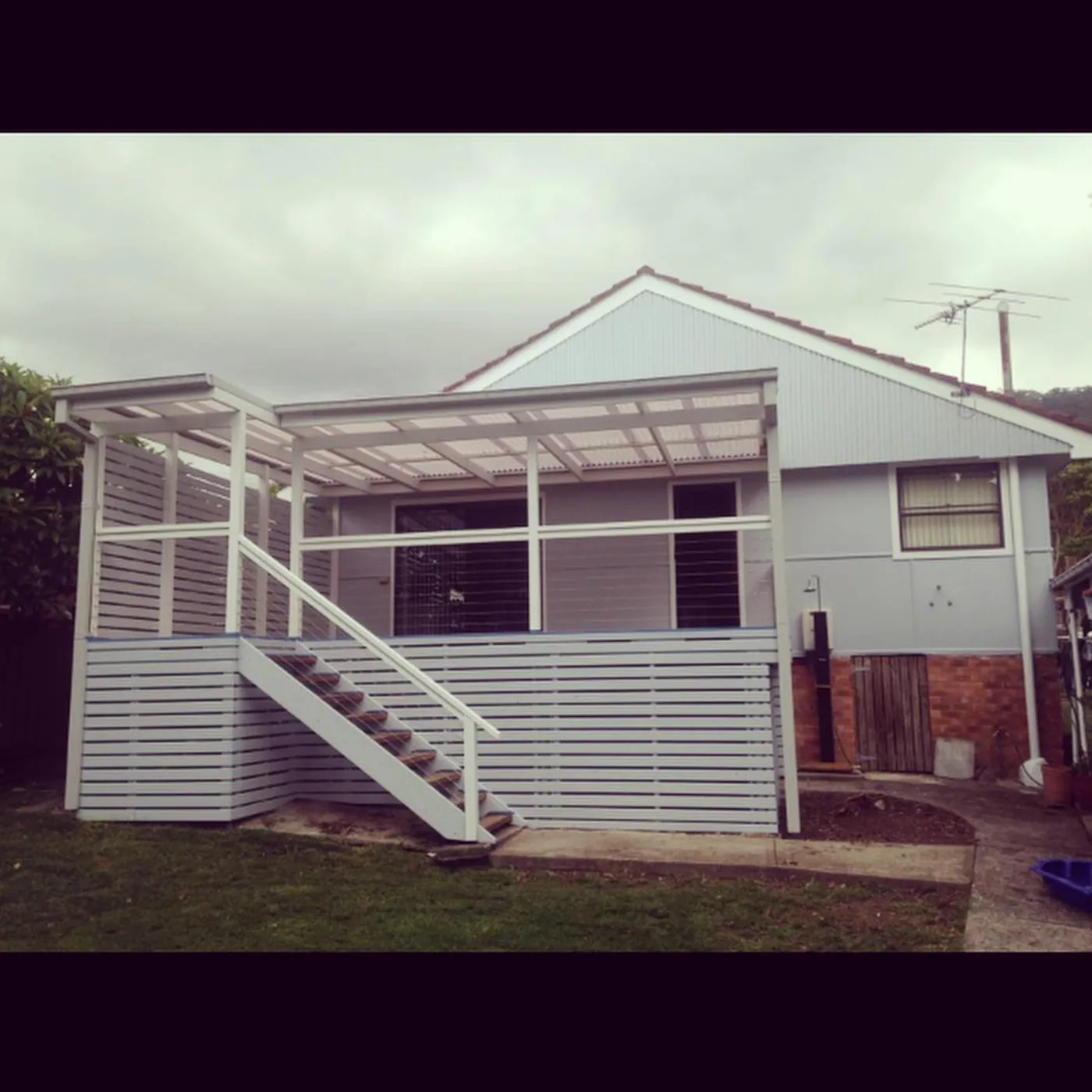
Short answer: it depends. A small pergola out the back of a standard block in Figtree might sail through as exempt work. The exact same structure on a heritage cottage in Kiama could need a full application. There's no clean yes-or-no that covers every job, which is the bit that does people's heads in.
So here's roughly how it works, in plain English, so you've got your bearings before you ring anyone.
The three buckets: exempt, CDC and DA
Most pergola, patio and carport jobs in NSW land in one of three categories.
Exempt development is the one you want. Stay under the size, height and setback limits and you generally don't need any approval at all — you just build it. The catch is you have to tick every box in the rules. Miss one and the whole job stops being exempt.
Complying Development, or a CDC, is the middle ground. It's a fast-tracked approval a private certifier or the council signs off, without the long wait of a full application, as long as your plans meet a set list of standards. Handy for the bigger or slightly trickier structures that have outgrown the exempt limits.
A Development Application — a DA — is the full process through council. You end up here when the job's larger, the block's complicated, or there's a heritage or environmental overlay sitting over the property. It takes longer and costs more. Sometimes it's just the road you have to take.
Don't guess where the lines sit. They move depending on your land, your zoning and which council you're under, so treat these three as a rough map rather than the final word.
The thresholds that tip you over the line
Under the NSW exempt development rules there are a handful of measurements that decide whether your pergola or patio stays in the easy bucket. I'll give you the general shape of it, but check the current figures with your own council — they get tweaked, and there are conditions hanging off every one of them.
- Floor area — there's a cap on how big the structure can be. Go over and exempt's gone.
- Height — roofed patios and carports have to sit under a set height, measured to the top.
- Setbacks — you need to keep a certain distance off the side and rear fences, and anything near the street frontage cops more scrutiny.
- Site coverage — all your roofed bits added together can't take up more than a set portion of the block.
Then there's the fiddly stuff that catches people out. An open pergola with no roof sheeting usually gets treated more leniently than a patio you've covered in Colorbond, because the second you put a roof on it you're shedding water somewhere, and that changes things. Raised decks and patios get measured differently again — which matters a lot on the sloping blocks you find all over the escarpment. And drainage, where your runoff actually goes, can quietly turn an exempt job into one that needs sign-off.
One thing worth knowing: a pergola is generally an open structure, a patio is generally roofed. That single distinction can change which bucket you land in.
Do you need council approval for a carport?
Same three buckets as a pergola. In NSW a modest carport can generally go up as exempt work, provided it stays under the height and floor-area limits, keeps the required distance off the boundaries, and doesn't sit forward of the building line at the front of the house. Miss any one of those and you're into a CDC or a DA.
That front setback is the one that catches carports in particular, because the front is exactly where people want them — off the driveway, near the street. Anything visible from the road cops more scrutiny. Whether the carport attaches to the house or stands free can change how it's assessed too, and so can putting a Colorbond roof on it instead of leaving it open.
Check the current numbers with your own council before you order anything, because the limits get tweaked and the conditions differ by zoning and land type. For the money side, what a carport costs in NSW goes through kit versus built, and the build itself is our sheds and carports work.
What about a house extension?
Different animal. In NSW, an addition that puts new habitable floor area on the house — a bedroom, a bigger living area, a second storey — generally can't be done as exempt work. It's a CDC if the design meets the standards, or a DA through council if it doesn't.
Worth knowing when the extension and the carport or patio are one job in your head. The house side may need an approval the outdoor structure wouldn't, and it usually pays to put the lot through together rather than build the easy bit first and find out later it's sitting where the addition has to go. Ask your certifier or council which path the whole job's on before anyone starts.
Heritage and bushfire: the two big spanners
Two things will override the easy path nearly every time.
If your place is heritage-listed, or it sits inside a heritage conservation area, the exempt route usually goes out the window. Loads of the older fibro and post-war brick homes around Wollongong, Thirroul and the Shoalhaven sit in conservation areas and the owners have no idea. You can still build. You'll just likely need proper approval, and the design may have to sit sympathetically with the original house.
Bushfire-prone land is the other one, and the Illawarra's got plenty of it tucked up against the escarpment and the bush. If your block's mapped as bushfire-prone, the structure may need to meet a Bushfire Attack Level, which dictates materials and how it's built. That can knock out exempt development and push you toward a CDC or DA, and it can shape the timber and cladding you're allowed to use.
Flood-prone land down near the rivers and the coast can do the same. None of it means you can't build — it just means the path's longer, and you're better off knowing up front.
Why getting it wrong is a genuine headache
Build something that needed approval without it, and the trouble turns up later, usually at the worst time.
Council can order you to modify or pull the structure down. It can hold up the sale of your house when the building inspection flags unapproved work. And insurance gets sticky if an unapproved structure is tangled up in a claim.
Sorting the paperwork first is a lot cheaper than unpicking it after the fact. A quick call to Wollongong, Shellharbour, Kiama or Shoalhaven council, or to a private certifier, will tell you which bucket your job falls into without much fuss.
Where we fit in
We build to whatever your approval allows. Once you know your limits, we'll make the most of them — merbau-framed open pergola, a spotted gum awning, or a Colorbond-roofed patio built to cop the salt air and the southerly busters off the coast.
We've worked on the old homes and the new estates from Helensburgh down to Nowra, and on plenty of the sloping blocks where getting the levels right actually takes some thought.
Not sure where your job sits? Give Dave a ring on 0414 007 351 for a chat, or grab a free quote and we'll talk through the practical side. Local, licensed and insured, and you're dealing with the bloke doing the work — not a call centre.
Want a hand with this at your place? Get a free quote or call 0414 007 351.